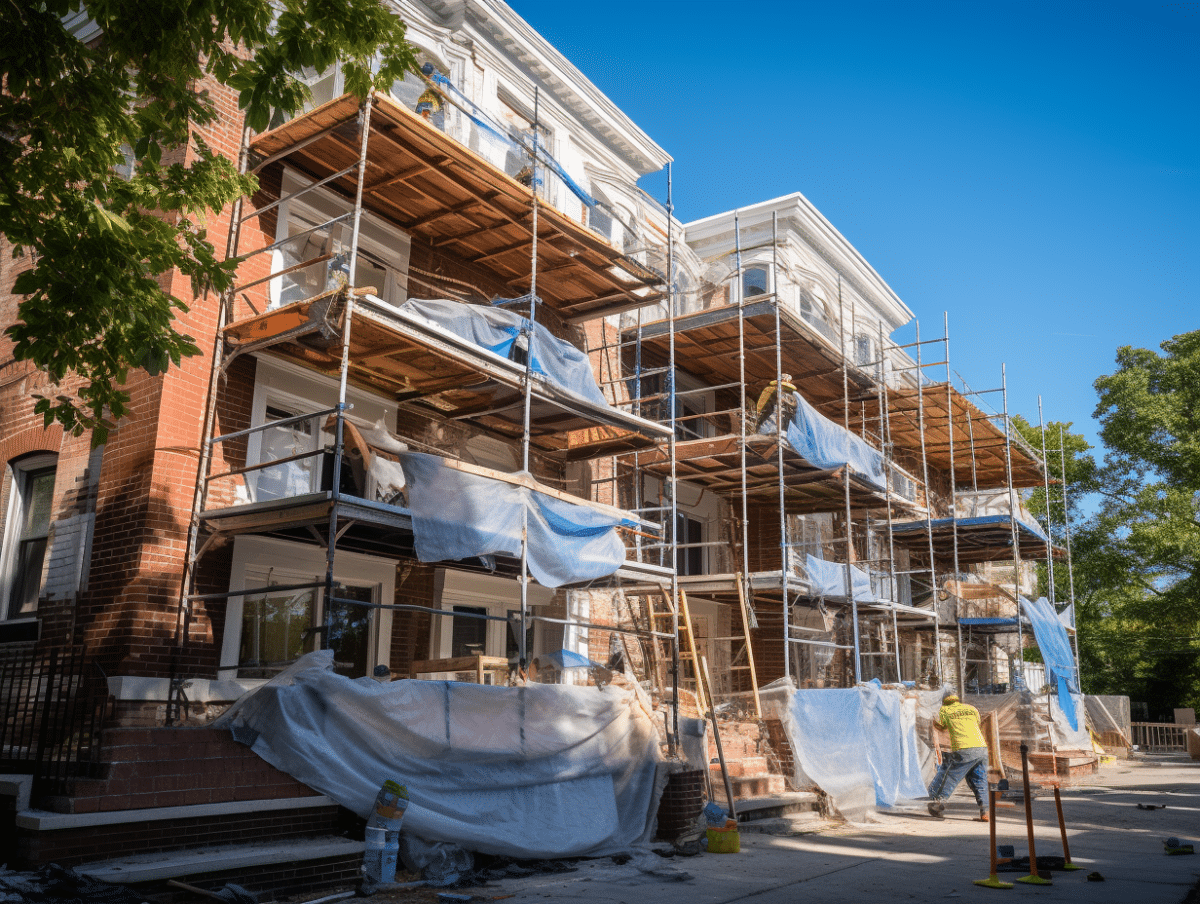
Over time, building facades endure the assaults of climate, pollution, and other environmental factors, leading to a degradation of their aesthetics and structural integrity. Renovation and cleaning of facades are therefore essential to preserve the value of a property and ensure its longevity. This process involves several major steps, ranging from assessing the condition of the facade to selecting appropriate cleaning techniques, and finally applying protective treatments. Each step is crucial to guarantee a successful and sustainable renovation.
Preparation and regulations before starting
Before undertaking any action on how to clean and renovate your home’s facade, you must familiarize yourself with the current regulations. Facade renovation is not a trivial act; it changes the exterior appearance of the building and must, as such, comply with specific legal frameworks. Consult the building and housing code and be aware of the required administrative procedures, such as the prior declaration of works, which is essential before starting.
Rules may vary depending on the location of your building, especially if it is in a protected area or a safeguarded sector. In some cases, exemptions may be granted for technical, legal, architectural, or economic reasons. Consult your local urban planning services to avoid any violations that could be costly.
Understanding the facade substrate is also crucial in order to choose the appropriate materials and techniques for the renovation. A precise diagnosis of the condition of the facade will determine the necessary interventions: repairing cracks, addressing moisture issues, selecting the type of coating, etc. A specialized professional will be able to guide you in these technical choices.
The selection of colors for the facade finish should be carried out with care. It is often subject to regulations, particularly in the context of preserving urban or rural heritage. The authorized color palettes are generally defined by Local Urban Planning Plans (PLU) or the Architects of Buildings of France (ABF). A harmonization is sought to maintain the aesthetics and visual identity of a place or neighborhood.
Detailed process for effective cleaning and renovation
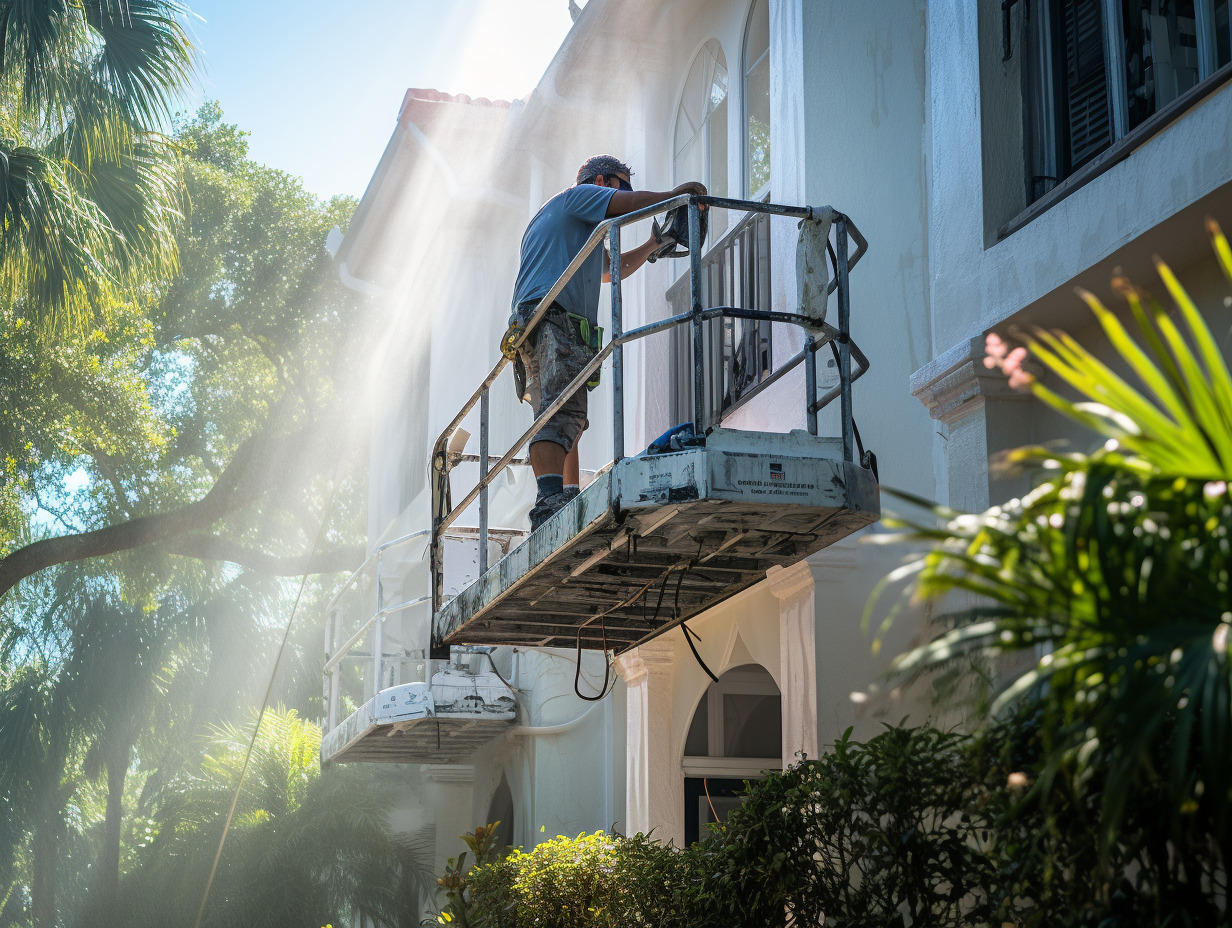
The first phase of a successful renovation lies in the cleaning of the facade. This step, often underestimated, is of paramount importance. Different techniques can be employed depending on the nature of the substrate: hydrogommage, sandblasting, peeling, or simple high-pressure washing. The goal is to remove the dirt accumulated over time while preserving the integrity of the coating. A specialized professional will be able to determine the most suitable method, taking into account any constraints related to heritage preservation.
The choice of coating is the next step and is fundamental. It must be suitable not only for the desired aesthetic appearance but also for the technical characteristics of the facade substrate. Whether it is a traditional lime coating, a sprayed monocouche coating, or a specific paint, each solution must meet criteria for durability and compatibility with the base material. The quality of the coating directly affects the protection of the facade against weather and moisture.
Do not overlook thermal insulation during the renovation. An energy renovation can be considered simultaneously, especially since financial assistance may be available for such work. External insulation, although complex, offers significant added value in terms of energy efficiency and indoor comfort. This is an operation that requires specialized expertise and may be mandatory for certain buildings, in accordance with decree n°2017-919. Consult experts to assess the possibilities and, if applicable, benefit from available subsidies.