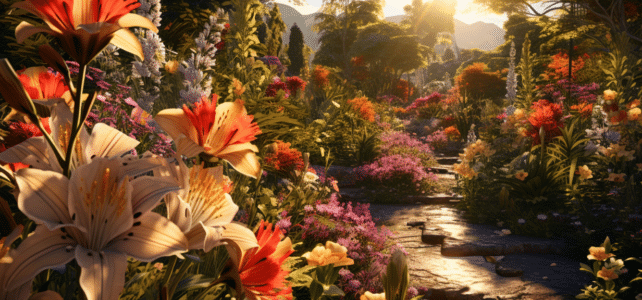
The wild expanses of the globe are teeming with an incredible diversity of plant life, reflecting the richness of our planet. From humid tropical forests to arid deserts, each ecosystem presents a unique array of life forms, adapted to survive and thrive in often extreme conditions. These environments are populated with plants that have fascinating characteristics, ranging from the deep roots of xerophytes to the dense canopies of the towering jungle trees. This botanical panorama is not just a feast for the eyes; it plays a fundamental role in climate regulation and provides essential resources for human survival.
Plant Diversity, a Reflection of Biological and Ecological Evolution
Plant diversity serves as a mirror to the complexity of biological and ecological evolution on our planet. It is in the intertwining of ecosystems that the polymorphic flora reveals itself, composed of entities as diverse as strawberry trees, cists, cork oaks, and maritime and umbrella pines that populate the maquis of Ericaceae. Plant biogeography and landscape ecology study these communities, revealing how plant species interact with their environment and contribute to forming unique landscapes.
Scientists are interested in how plants orchestrate biogeochemical cycles and fit into the food chain, playing a central role in the circulation of organic matter from one organism to another. The process of photosynthesis, fundamental to life on Earth, is a striking example of this interaction, where plants convert light energy into organic matter, thus fueling entire ecosystems.
The study of plant landscapes applies at various spatial scales, from the local plot to the planetary biome. Landscape ecology researchers scrutinize these configurations to understand ecological dynamics and evolve towards sustainable development practices. Nature, in its plant diversity and interactions with animal species, is a key player in these ecosystems, whose preservation is fundamental for the future of biodiversity and humanity.
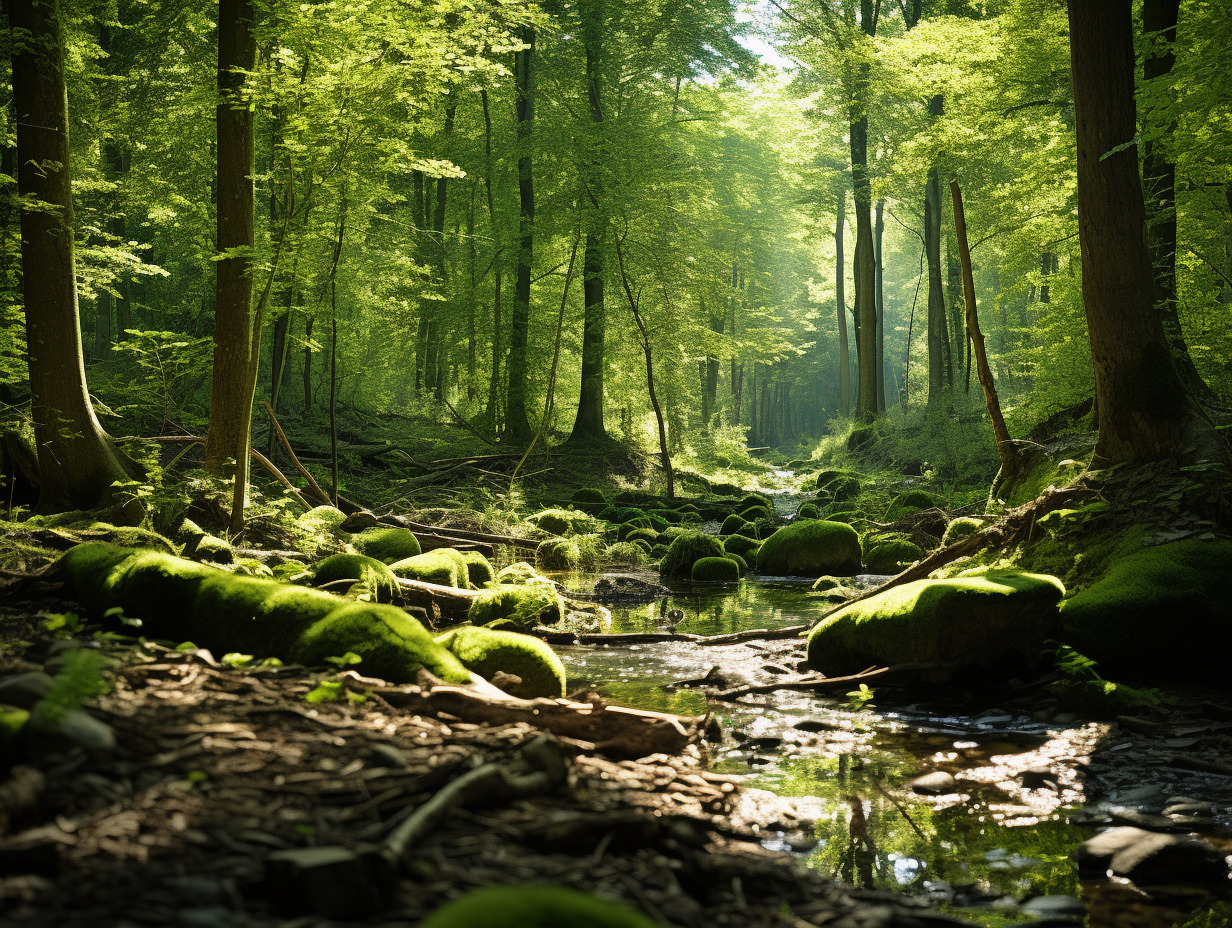
The Challenges of Conserving Plant Diversity in the Face of Human Activities
In the face of human activities, the conservation of plant diversity emerges as a major challenge. The pressure exerted by the exploitation of natural resources, urban expansion, and intensive agriculture leads to an unprecedented erosion of biodiversity. The transformation of geographical landscapes, under the influence of these activities, affects ecosystems and, thereby, the balance of geosystems analyzed at different spatial scales. The Massif des Maures, a haven of biodiversity and maquis of Ericaceae, is experiencing these pressures, highlighting the fragility of these natural environments in the face of humanity’s ecological footprint.
Climate change amplifies these challenges, disrupting the living conditions of plant species. Physical geography, enriched by the work of Paul Vidal de La Blache and Emmanuel de Martonne, provides tools to understand and act on the complex interaction between humans and the environment. The new geography, driven by Roger Brunet, reveals the urgency of a sustainable use of spaces to preserve the vital balances of the biosphere.
In this perspective, food security and the preservation of landscapes require a holistic and integrated approach that takes into account the multiple facets of plant diversity. The Convention on Biological Diversity is an international framework aimed at promoting sustainable development, recognizing that biodiversity is an essential resource for current and future generations. Effective conservation of plant diversity thus necessitates a thorough reflection on development models and their impact on terrestrial ecosystems.