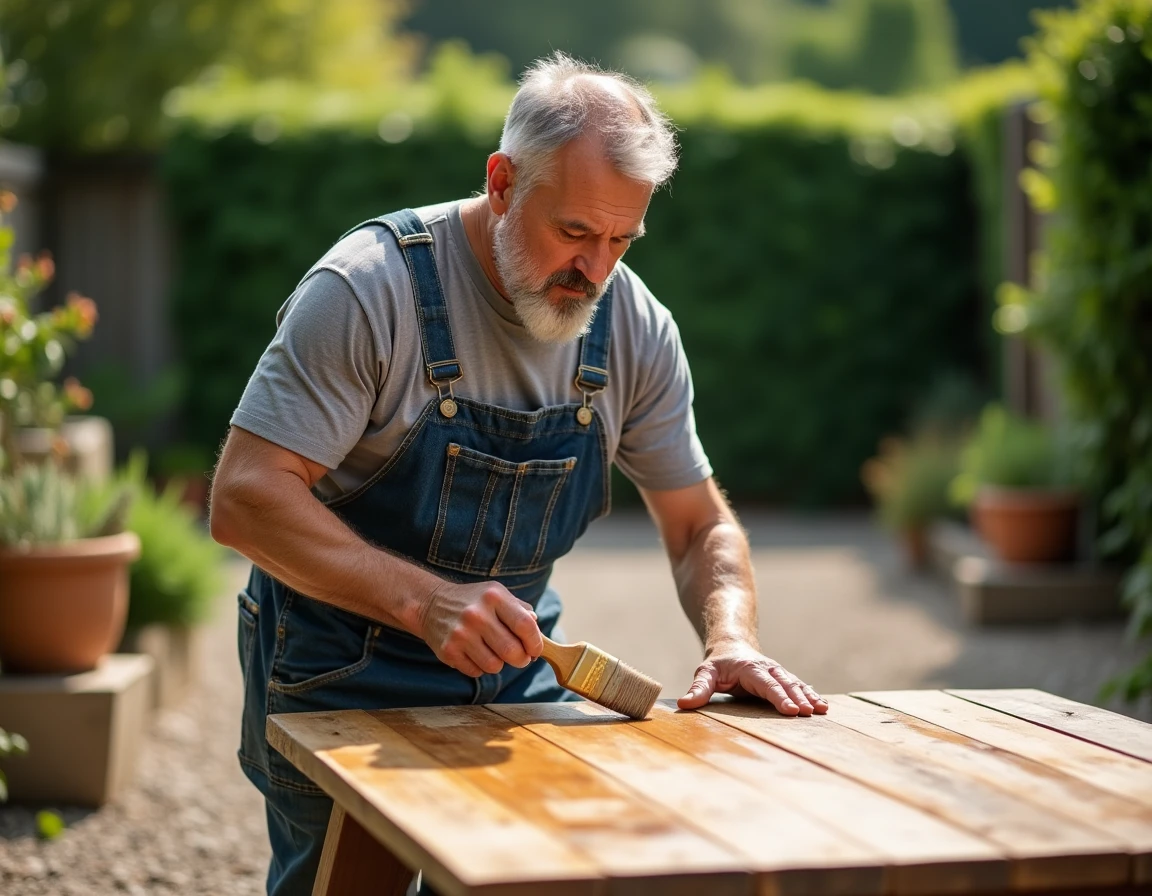
The stain forms a film on the wood, while the saturator penetrates its fibers. This technical distinction conditions everything else: the resulting appearance, maintenance frequency, renovation method, and suitable support type. Understanding the difference between stain and saturator helps avoid a choice that complicates maintenance for years.
Protective film or impregnation: the mechanism that changes everything
A stain is a film-forming product. After drying, it leaves a semi-transparent layer on the wood’s surface. This film reveals the grain but creates a physical barrier between the wood and external aggressions (rainwater, UV rays).
The saturator works in the opposite way. It infiltrates the wood fibers without leaving a film on the surface. The wood absorbs the product, nourishing it from the inside. To the touch, the surface remains raw, without a layered effect.
This difference in mechanism has a direct consequence on aging. A stain ages by flaking: the film eventually cracks and peels, especially on horizontal surfaces exposed to standing water. A saturator, on the other hand, wears away through gradual erosion without ever peeling. The wood simply loses its hue and gradually grays.
To fully understand each use case, consult this guide on the difference between stain and saturator.
Natural look or satin finish: the rendering on wood
The saturator maintains the raw appearance of the wood. The surface does not shine, does not stick, and the grain retains its original relief. For an exotic wood terrace or cladding where a natural touch is desired, the saturator is the logical choice.
The stain offers a more refined finish. Depending on the formulation, it can provide a satin finish, even slightly glossy. It also comes in a wider range of shades, allowing for color modification of the wood while maintaining some transparency. On shutters, windows, or a wooden gate, the stain provides a more polished finish than a saturator.
A common pitfall is applying a saturator on wood that has already been stained (or vice versa). A saturator cannot penetrate wood covered with a film. If a stain has already been applied, the surface must be sanded or stripped before switching to a saturator. However, applying a stain on previously saturated wood poses fewer problems, provided the old saturator is well-eroded.
Outdoor wood maintenance: frequency and renovation method
The ease of maintenance is the criterion that sways most choices. The saturator is very easy to renovate: clean the surface, possibly apply a brightener if the wood has grayed, then apply a new layer of saturator directly. No sanding, no stripping.
The stain requires a heavier protocol. When the film begins to crack, the peeling parts must be removed, sanded to achieve a smooth surface, and then the product reapplied. On a large terrace, this operation represents several hours of work.
- The saturator is renewed by simply applying an additional layer after cleaning, making it the most suitable product for horizontal surfaces like terraces and decking.
- The stain requires partial or total sanding before reapplication, but its initial durability is often longer on vertical surfaces that are less exposed to standing water (cladding, shutters, carpentry).
- A change of system during its lifespan (switching from stain to saturator) involves complete stripping, while staying within the same system simplifies future maintenance.
Terrace, cladding, or carpentry: which product according to the support
The nature of the support often settles the debate better than aesthetic preferences.
On a horizontal wooden terrace, the saturator prevails. Water stagnates, repeated traffic wears the surface, and the film of a stain degrades quickly under these conditions. The saturator tolerates these constraints without flaking.
On vertical cladding or carpentry (windows, shutters, doors), the stain takes the advantage. Water runs off without stagnating, UV rays are the main aggression, and the film of the stain offers long-lasting protection against graying. The range of available shades also allows for harmonizing the carpentry with the facade.
For fences and gates, both products work. The choice then depends on the desired appearance and maintenance tolerance. A stained gate will maintain a neat appearance longer without intervention but will require sanding when renovation becomes necessary.
Low VOC saturators and microporous paints
Formulations are evolving. In recent years, low volatile organic compound (VOC) saturators have appeared on the market, with an impregnation comparable to solvent-based versions but with reduced environmental impact. Meanwhile, microporous paints for exterior wood are positioning themselves as an alternative to traditional stains: they form a film while remaining permeable to water vapor, reducing the risk of flaking on facades and carpentry exposed to the elements.
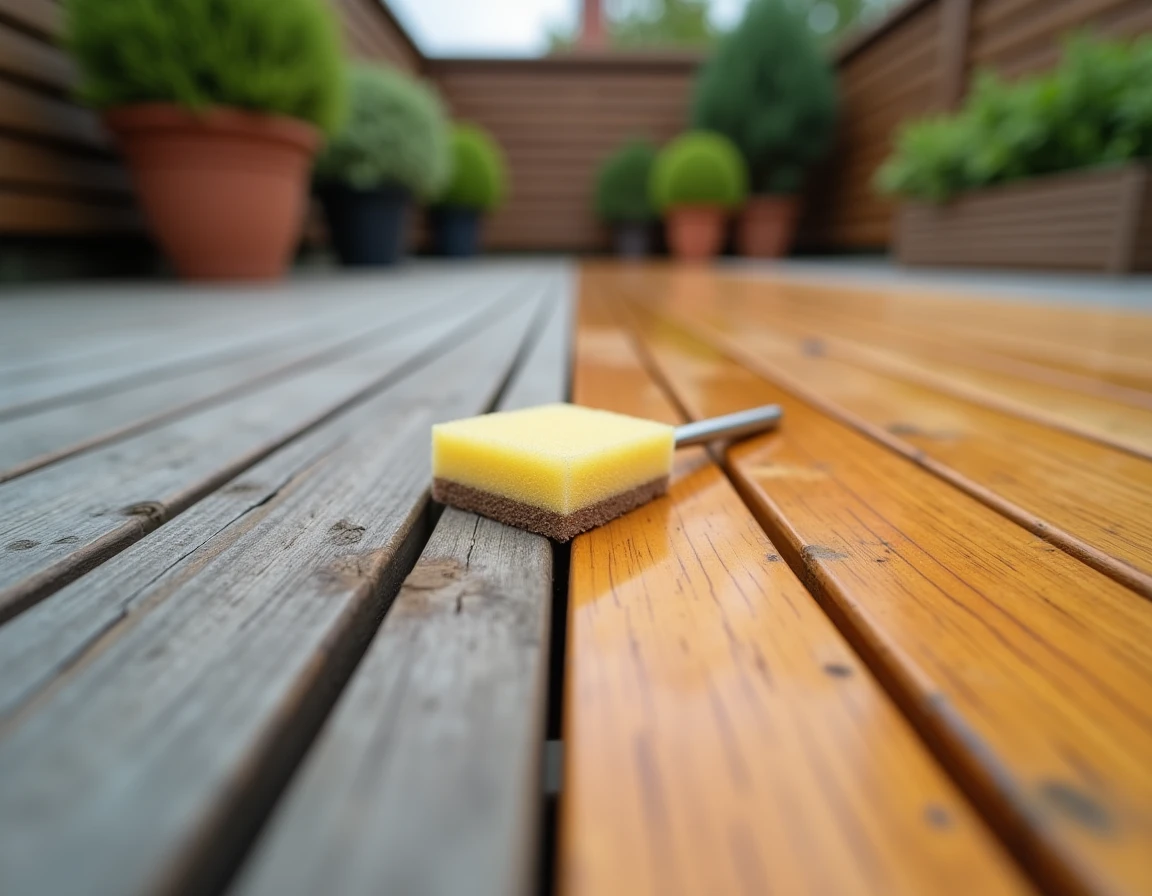
The choice between stain and saturator is based on three concrete parameters: the orientation of the support (horizontal or vertical), the level of finish desired, and the maintenance method accepted over time. A saturator on a terrace and a stain on carpentry remains the most coherent combination for the majority of outdoor configurations.